The First of Us
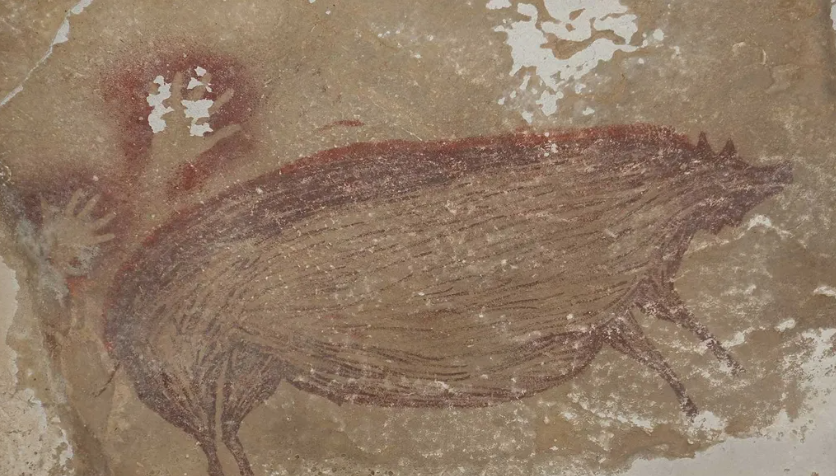
During this week, as we slide into Taurus season and prepare for the Taurus new moon, I find myself integrating old layers of grief—especially around rejection, and the quiet devastation that comes with it. This season invites slowness, embodiment, and earthbound reflection. And as I sit with these themes, a deeper question arises—one that has echoed quietly in my bones for some time:
Who was the first human to experience trauma so profound that they projected it outward?
Who is trauma patient zero?
Who was the first to hurt instead of heal?
When did pain stop being held and start being weaponized?
It’s a weighty and worthy question. Because somewhere in the long human timeline, someone broke—and rather than be witnessed or tended to, they passed it on. That moment became a psychic scar we still carry, duct-taped over with spiritual jargon, affirmation culture, and bypassing.
And in 2025, that ancestral fracture feels like a haunted landscape. A shimmering relic, almost alien in its energy, that still keeps humanity disassociated from ourselves, from one another, and from the earth that made us. The wound that led to slavery, exploitation, empire, and control. We’ve built entire civilizations on top of it.
And I can’t help but wonder...
Cats were smart enough to domesticate themselves. So what the hell is wrong with us?
Was it due to extreme conditions tied to survival? A brutal winter, scarce food, the relentless need to choose the tribe over tenderness? Was it parental abandonment—before human societies established the communal systems of child-rearing we now see in oral traditions, where elders and parents shared the emotional and physical labor of care? What was the world like then—the weather, the terrain, the unrelenting fear of not making it through the night?
Did abandonment become the first wound?
The child left too long. The infant whose cries went unanswered.
Because abandonment leaves a mark like no other—
not just in the psyche, but in the cellular memory.
And when that pain festers without being held or heard, it doesn’t just die.
It evolves into projection. Into punishment. Into power structures.
Could that have been the moment—
not when humanity became cruel,
but when pain went un-witnessed for the first time?
I know a little something about an infant whose cries go unanswered—
I was one.
How do I remember that, you ask, dear reader?
That’s an easy one: Ayahuasca.
In my third ceremony, Mother Aya took me to the moment of my birth—
a traumatic cesarean section.
There was no natural initiation, no compression of the birth canal to activate the lungs, no ancestral rhythm guiding me into breath.
Just a sudden cut from one world into another.
I was born with little body fat, unable to thermo-regulate.
And I was screaming—tiny and alone in a hospital bassinet,
crying for anything that would come and provide warmth.
I shivered. I shook.
I relived it in ceremony, and I watched.
Only one nurse came.
She looked at me and then she left.
Mother Aya whispered:
“Weep for her.”
But I refused.
Why?
Because I believed what the moment taught me:
“It didn’t matter then, so it doesn’t matter now.”
But oh, dear reader—yes.
It does matter.
Earlier this month, while in Belgium, I entered the “blue room” of the Château—
a cellar-like space deep in the roots of that house.
I sat there wrapped in my coat, rattle in hand, and I sang.
I sang for her.
For the baby.
For me.
And in that moment,
I answered the cry that once went unanswered.
Someone asked me what Mother Aya had done for me.
My response was simple:
“She put me back together again.”
In Belgium, I was asked what Mother Aya has done for me - my response was simple - "She put me back together again."
How do we put the pieces back together once we begin to realize that we, too, carry the trauma of Patient Zero?
Perhaps the act of wondering—what did they endure?—
becomes a lantern for our own story.
Perhaps it allows us to see our pain with more compassion,
to hold it in a way that feels loving, not shameful.
Like we're finally holding ourselves the way no one ever did.
We may no longer live in a world where survival demands hunting and gathering—
but the needs of an infant haven’t changed since the first heartbeat.
Warmth. Touch. Nourishment.
Presence.
Rejection beyond infancy is another familiar ache.
Being unwanted—being different from the family you were born into—
adds its own layer of wounding.
You learn to twist yourself into something they might find tolerable.
You craft masks. You tell partial truths. You stay small.
It becomes a web of illusions built for safety—
but eventually, if we’re lucky,
we find a place where we can rest.
Where someone says,
“You can stop now. You are safe enough to feel.”
That kind of safety,
that kind of healing,
doesn’t come easy.
It doesn’t come cheap.
Not in a world that has commodified suffering and rewarded the spectators of pain.
To heal is radical.
It begins not with therapy or ceremony or medicine—
but with a choice.
And that choice is the quiet undercurrent of everything I write.
So I ask you now, as I’ve asked myself many times:
What are you choosing?
In Belgium, I experienced a rebirthing ceremony—the ceremony I didn't know I needed—to be born laughing.
I leave you with William Blake and Infant Joy -
I have no name
I am but two days old.—
What shall I call thee?
I happy am
Joy is my name,—
Sweet joy befall thee!
Pretty joy!
Sweet joy but two days old,
Sweet joy I call thee;
Thou dost smile.
I sing the...