When Everything's Made to Be Broken...

It's Thanksgiving in the United States today - a holiday so whitewashed it gives Clorox envy. That said, as Harold Johnson said, it's a story - so we can re-write it. I started this morning in Willaq Puma sharing circle, so I re-write today with gratitude and thus this piece.
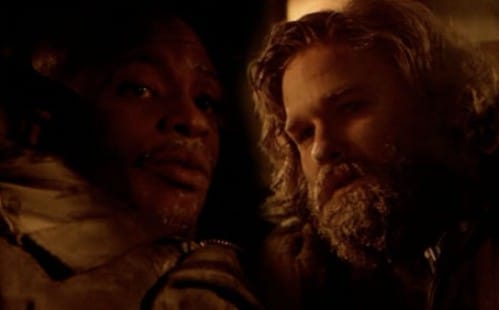
As I watched del Toro's brilliant Frankenstein, it struck me at how so many themes of morality and ethics, not only in medicine, but in life, Mary Shelley hit upon in her writing. Victor never stops to think about whether he should be creating this being, a summation from parts given life by the power of lightning to quicken its resurrection, versus the growth cycle within the womb that brings us all into being. I thought about how many similarities I had with the being that Victor created - a being misunderstood yet so compassionate and warm, far beyond that of the man who created him. The vessel of the "monster" may have been a summation of parts from others, but his spirit was something else entirely, one which he needed to discover outside the laboratory of his birth. That journey was unique for him, and it is not dissimilar to the road each of us is on.
The journey, the hero of a thousand faces (Joseph Campbell), was that of Victor's creation; it is also mine, and yours as well, should you choose to take it. I find comfort in having more in common with Victor's creation than Victor and the times in which he lived - in which Mary Shelley lived. The Victorian era, where baths were scarce and empathy even scarcer. "Are there no workhouses?!" Ebenezer Scrooge would growl - we're all familiar with that story - the story of the Victorian era - it is no shock that Shelley named her salacious scientist after the times in which she lived - it's decadence, its misery, and its lack of ethics, morality, and empathy (sounds like 2025 doesn't it?).
As I watched the film, I thought about a mythos similar to the creatures, that of Isis as she sought to reassemble Osiris, yet on that journey, she reassembled herself even more so. Believing her task initially complete, Seth, enraged, scattered Osiris' remains throughout Egypt. Undeterred, Isis would shapeshift into a bird along with her sister, Nepthys. Together, they would eventually find almost all of his body for reassembly. Isis, the goddess of Magic, what would she convey from that bird's vantage point about her journey - the discovery of herself through her own eyes, but in another form? Wasn't that really what Victor's creation was? A vantage point of Victor's, through another form - perhaps even a mirror?
Isis would utilize her breath for resurgence, whereas Victor utilized lightning—one a story of love and sacrifice, the other, egoic achievement, yet forgiveness in the end.
The creature would hunt Victor ceaselessly until the end of Victor's life, when he finally succumbs to the grief of his deeds and receives forgiveness from his creation - a forgiveness Victor could not extend to his own father nor his brother. Victor's creation was a far greater character of morality and compassion than he was as a physician, a profession that demands both of those qualities in excess. The creature found these things within himself whilst on his own journey of self-discovery and the road of revenge he walked.
The creature learns empathy not through guidance, not through nurture, but through observation—through witnessing the best and worst of humanity and choosing, astonishingly, not to replicate the harm that birthed him. Every encounter becomes a shard of the mirror he pieces himself together with. The kindness of a blind man, the fear of villagers, the innocence of a child, the cruelty of those threatened by what they don’t understand—he gathers them all, studies them, and in doing so discovers that what animates him is not lightning, but longing.
Longing to belong.
Longing to be seen.
Longing to know himself beyond the intentions of the hands that built him.
Isn’t that, in its own way, the path each of us walks? We are all stitched from the remnants of others—their unhealed griefs, their dashed hopes, their sacrifices, their mistakes. Some of us carry the anger of our fathers, the sorrow of our mothers, the unresolved conflicts of generations. And yet, life asks us to do what Victor’s creation did: to sift through the pieces and decide which ones are truly ours. To find, in the faces of others, the reflections that guide us closer to who we actually are. What I like to call the grand remembering.
By the time the creature stands over Victor in the frozen wasteland of the Arctic—by the time he has hunted him, challenged him, mirrored him—he has already surpassed him. He has grown into a self that Victor could never sculpt, because he has grown through relationship, not isolation. Through experience, not arrogance. Through grief, not pride.
And in the end, when Victor dies, it is the creature—the being made of the discarded parts of men—who offers him the one thing Victor never offered in return: compassion. Victor is forgiven, not because Victor earned it, but because forgiveness was the final piece the creature needed to reclaim for himself.
Forgiveness becomes his liberation, the act that dissolves the last tether binding him to the man who defined his beginning. In releasing Victor, he releases himself from the endless cycle of grief and vengeance. He chooses, at long last, to become something other than an echo of his maker’s wounds. In that moment, he is no longer the sum of cadaverous parts. He is no longer Victor’s mistake. He is no longer a reflection of Victorian fear or scientific ego.
He is sovereign.
He is whole.
He is free.
Thus, it is the journey that each of us has the choice to make as we dwell upon this planet of ours. We will journey in self-discovery, or will we journey in self-destruction?
I leave you with a portion of Lord Byron's Childe Harold's Pilgrimage:
Thou glorious mirror, where the Almighty's form
Glasses itself in tempests; in all time,
Calm or convulsed—in breeze, or gale, or storm,
Icing the pole, or in the torrid clime
Dark-heaving;—boundless, endless, and sublime—
The image of Eternity—the throne
Of the Invisible; even from out thy slime
The monsters of the deep are made; each zone
Obeys thee: thou goest forth, dread, fathomless, alone.